Ou-ba-ju-ba-wobbles…and body language

I was intrigued when I watched this TED talk with Amy Cuddy. I cannot remember how I came across it, however, it has my mind going with so many ideas and questions. Body language is fascinating to me. She talks a lot about how we carry ourselves and what that means about our emotional state. When we are in a business meeting are we slouching or sitting upright? What are our legs doing? Do we cross them or put them up on a table?

So what did you think of what she had to say? I have a confession. Growing up I always had a large chest. You know, breasts, boobs, ou-ba-ju-ba-wobbles. I hated it. I hid them, or at least I tried. It impacted my posture. I stopped standing up straight. I started rolling my shoulders and over time my shoulders now have stayed that way. I try to work on my posture, but I am afraid it will take a while to fix after all those years of hiding myself. I remember a Sunday School teacher once told me to stand against the wall and stand up straight and carry myself proudly. I was offended (especially because it was in Sunday School)!

Yet, after listening to Cuddy’s video, it makes me think a lot about body language and power. How we sit, how we interact, our facial gestures, etc. I ask myself: How am I sitting in my meeting? How do I carry myself when I am interacting with family? Do I look engaged and interested, or bored and tired? Do I show respect with my body language? Do I show my power, or hide behind my body? All interesting thoughts to me as I assess how I am ME in this world.

What do you think?

How are you perceived?

I was talking with Chris on the way home last night about perception. It is an interesting thing. Do you ever think about how others perceive you?

You might feel that others think of you as confident, or feisty, or determined. They may think of you in that way too. But, what if they do not? What if instead they think of you as aggressive, cocky, or impatient. Does how others perceive you matter? Does it change how effective you are with them, whether in a work or personal setting? I think it may. Do we have to manage others perceptions of us? Does it matter?

Often I think that others can be blocked to get to know someone more, or make a decision not to pursue creating a relationship or alliance with someone because of their assumptions or perceptions. I do not think we have to change who we are, or adapt who we are for others, but I do think we need to be aware of how we are perceived. Would knowing that make you approach a situation in a more gentle way? Or maybe just the opposite, would knowing how you are perceived make you act more aggressive? In some ways it is knowing your audience and understanding what they need and how they view the world. It may make a difference in how you interact with your boss, your kid, or your spouse.

I would love to hear other’s thoughts on this topic as it was a spur of the moment thought for me and one I would like to dig deeper into. Any books or articles you have read on this topic? Please share!

We All Just Want To Be Loved

It seems like with everything I do the idea that continues to come back to me again and again is that we each just want to be loved. Whether it is a child acting out, another starting a tantrum, or a child that does not stop talking because all they want is attention. It might be the co-worker that does a certain thing that when you watch from the sidelines you see it is a call out to all to listen and see them. It might be a boss that needs a bit of love too. We all need love no matter what role we fill. Sometimes, though, some of us do not know how to ask for love, or to show others that we need it and to compensate, we act out. Others may find us acting needy. When really all we are want from the deep parts of our soul, is to feel and be LOVED.

Do you know others around you that you can see so badly want to feel loved? Do you give them the love they need? Do you know how? Sometimes even those crying out for love do not know how to receive it in return. For me, when I am in a conversation with someone else, I want to focus on that conversation and connection completely. I want to give of myself during that time period. However, when I find those I am interacting with are not present or are distracted, it often sends me a message that I am not valued, heard, or loved. It is a place of frustration for me. So I focus often (or try to) on what others are saying and being present in my conversations with them. I want them to know and feel that I care and am present. I want them to feel that I hear them. It is all a form of love.

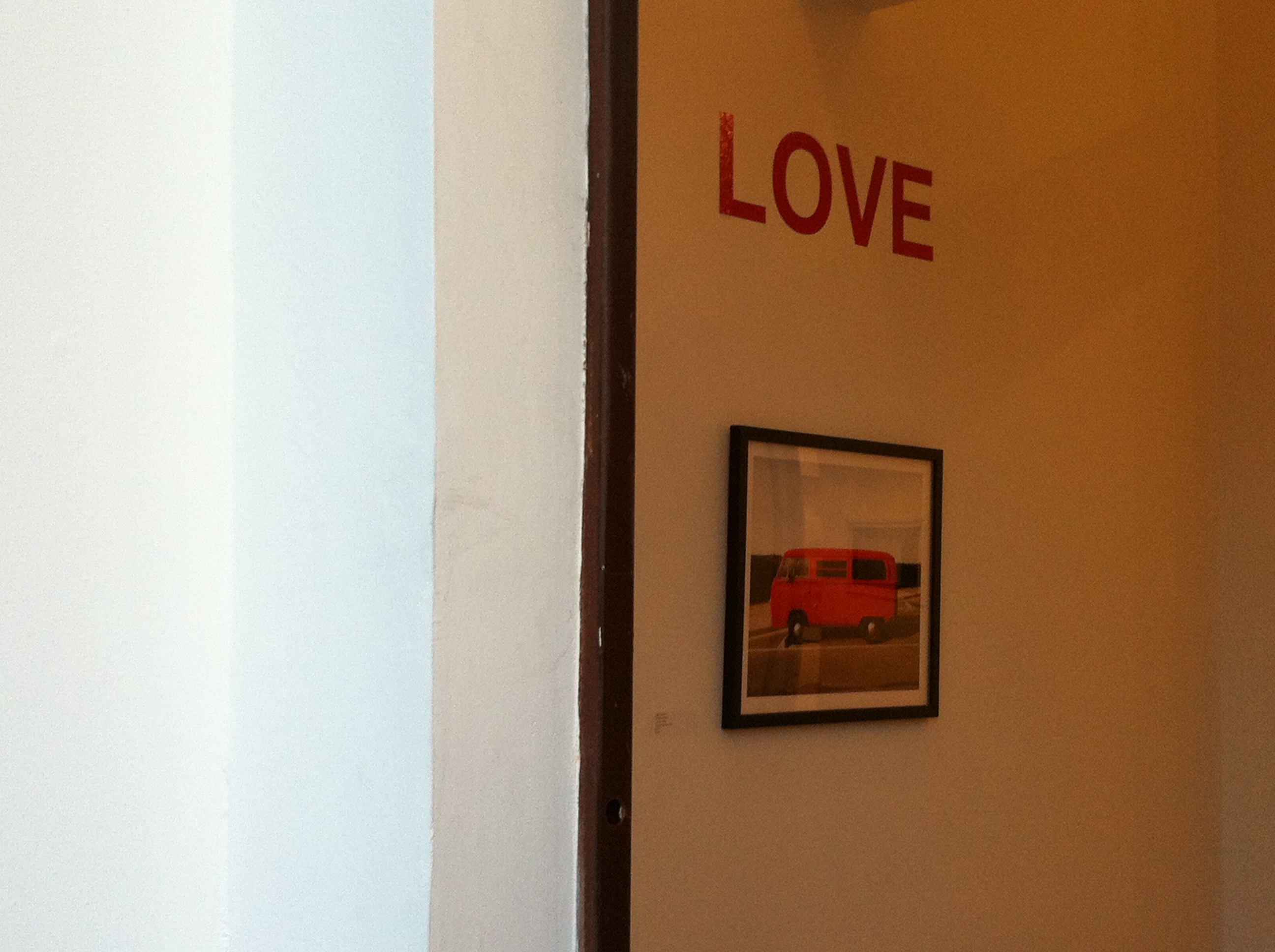
a little LOVE in Venice, CA

Do you agree? Do you think that at the core of all we do we all just want to be and feel loved? If you agree, how does that help you to focus differently on others today? Tomorrow? The next day?

Do You Feel Heard?

Growing up my dad would often say: “Children should be seen and not heard.” Usually it was when he was grumpy, upset, or angry, but it made a mark on me. I think for many, many years I found it hard to speak up and say what was on my mind. I think in my head, I had replaced “children” with “women.” I saw many boys and men speak their minds and they were listened to, but when I would try to speak up, I felt timid and like my ideas would not be meaningful or have value. So I kept quiet.

Jump from childhood to the middle of college. I was a Sociology major, taking classes on race, class, and gender. I was learning I had a voice. I had shaved my head, I was starting to talk, and it was as though a pipe had burst. I had found my voice. It had only taken me 10-15 years!! I have vowed (thank you Chris for going along with me on this one) that my children will be heard. I will watch that if I have a little girl, that I will hear her just as if I have a little boy. I want my children to be proud of what they have to say, to be bold, and to feel that even if others disagree, that they should still speak their mind.

Sometimes we have those days when we do not feel heard or understood by others. One of my pet peeves is when you are talking to someone and you can tell they are not listening. So when I read the Daily Om from May 24, 2012 I appreciated thinking about the relationships in my life where I feel listened to and understood (unlike as a kid). I specifically like this line:

“When we are in a relationship where we feel listened to and understood, we count ourselves lucky because we know how rare that experience is.”

As I mentioned earlier, it took me many years to be able to stand up for myself and communicate to those close to me how important their presence of active listening meant to me. In my mind, active listening and communication is a form of love. It says I care enough about you that I will be present in this moment and listen to what you have to say and hear what you might need right now.

Fast forward to 2012. I now speak my mind freely, at times possibly too freely. I know I have a voice. I know it matters. I know it should be heard. Is there someone in your life you are not listening to? Someone that needs so earnestly to be heard? Have you taken the time out to listen to them?

A good reminder for us all.

You inside and outside of your marriage

Last week I finished reading: “No Cheating, No Dying: I Had a Good Marriage. Then I tried to Make it Better” by Elizabeth Weil. It is an interesting book, a quick read. She has a good marriage and just wonders if there are ways she can make it better. I am in the same boat, although I would not call my marriage good, I would call it exceptional. I know, I am biased, but I just have a great admiration for the communication that happens between my husband and me. Having said all that, there is always room for improvement in any relationship, so I like reading books that could shed light on how I might be able to look at things differently in my marriage and make it that much better.

So a little background. I was very independent when I met my husband. We met at work, and we both remember that we did not really like each other too much. He was too nice to me, and I did not trust that, and he did not like me because I was not nice enough. Go figure. After working very long days together, we got to know each other well, and when I left my job we realized that we missed each other and all the time we spent together. The rest, well, is history in the making. We met almost 11 years ago. We have now been married for almost 9 years. I struggled in the beginning to try to understand who I would be as a wife, while also a strong feminist and very independent. I was not going to be driven in the car (I would drive), I was going to talk to the mechanic about our car, we would share cooking and cleaning, etc.

Over time, we found a balance. He drives (he loves driving and I could care less about the actual driving part) I read and catch up with to-do’s on my phone, I get a report from him about the mechanic, and I no longer cook. Early on I screwed up making pesto and put in way too much garlic. He ate it and smelled for days. Call it love, but it was the beginning of his control of the kitchen. Now I love it and leave him alone when he cooks each night. It is his time. I am the baker. I make the sweet things and the yummy breads and goodies. It all works out. But, it does not mean that I do not wonder if I am balancing who I am independently with who I am in my marriage. Elizabeth and her husband have an agreement: No Cheating, No Dying. My husband and I have a similar strong agreement and have from the very beginning: No cheating, and our trust and honesty in each other is the utmost importance. These questions about balance between being a woman and independent and being a wife is why this quote from Elizabeth’s book resonated with me:

“I was an even less likely candidate than Dan for a wholly merged life. One of my more telling memories of myself as a young woman and of how unbending I was in love happened the evening a new boyfriend wanted to make me a cilantro-lime pesto, and instead of walking with him on that warm spring evening to buy limes, I suggested he run the errand alone. By the time I met Dan, at age twenty-eight, I’d shed some of that rigidity. I knew more about who I was, so I felt more comfortable being swayed. But nearly a decade into marriage, and sincerely hoping to remain married to Dan for many decades more, I did not understand how much I should be swayed by my husband. What algorithm should determine how much I tipped over into the warm bath of our union and how much of myself to keep separate, outside?” page 2.

It is a dilemma many of my married friends have discussed. I love my husband, have excruciatingly high standards for him, and as Elizabeth mentions of Dan, her husband, my husband is the center of my life. Where is the line of who we are as a person, as a woman, and where is that blending of our love for our husbands, our shared desires in marriage and life? I often find that when my husband is traveling I back away into myself. I am quieter and more introspective. Sometimes that is because he is so busy when he travels that we talk briefly sometimes only once a day. I think it is also because I have a different area of space around me when he is away. Maybe for some couples this is not an issue, maybe they lead such separate lives that each individual does not wonder which side of the line they have veered too far across, one that keeps them so remotely independent, or to the side of never being apart from their spouse.

How do you handle independence and closeness with your spouse? How do you ensure you are completely connected, yet also focusing on what makes you keep your groove, what makes you YOU? Would love to hear any insights!
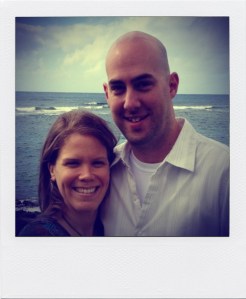
the happily married couple 🙂