Should kids have to work for an allowance?

I am still on a kick about the book: “All the Money in the World: What the Happiest People Know About Getting and Spending” by Laura Vanderkam. This is the topic that I have been mulling over: Kids and Allowance. On page 210, Laura says:

“For instance, should kids get an allowance? It seems like a straightforward way to teach them how to manage money. Give them $5-$10 a week, and let them handle their small purchases out of that. Likewise, financial education for high schoolers sounds smart. Given the proportion of adults who live paycheck to paycheck and don’t understand what the interest rates on their credit card mean in terms of payments, it can’t hurt to teach kids about money.”

I take it one step further and ask: Should kids have to work for an allowance? I think growing up, my sister, brother, and I occasionally received an allowance. We definitely had to work for it. I can remember often my father would check our work and if it was not done well, we would not get paid. Honestly I do not think they had the money to truly pay us an allowance, so finding our work not perfect was maybe a way out of paying us. Other times he would find things around the house to give us in payment for the chores we had done. Once I remember receiving a caramel/chocolate candy bar that we were selling for school. So I guess in my house growing up it was more of the barter system. Even with the odd and inconsistent payment system I experienced, I do believe there is a purpose and educational aspect of receiving an allowance for chores or tasks. It starts kids out at a young age to know what it means to work and get paid for it. It teaches the value of money. It could be that if a child was willing to do more, they could get paid more (like overtime for adults, if the parents have the funds to do so). Parents could also institute a bonus system for excellent quality of work or attitude just as some adults may receive a bonus based on performance depending on their company.

If parents give an allowance without having to work for it, what life skills are the kids learning? When they become adults do they receive money without having to work for it? Maybe if they have a trust fund, but for the rest of us, we have to work hard for the money we are paid. I believe that hard work makes us think differently about our money, what we purchase, and how we spend or save. Does working for an allowance teach kids the beginning value of money in their lives? One could make the point that kids can learn the value of money and saving without having to work for it. I agree that it can be taught, however, those kids that have the opportunity to learn about the basics of money and how to manage it, in addition to having to work for it is an even better educational life experience.

I wonder what would financial education look like for high schoolers? I had an economics course in high school where we learned about stocks and bonds. I remember the simulation of our “made up companies” and how well our stocks did, but I never learned about the basics: balancing a checkbook, my credit report, credit score, credit card debt, etc. It was almost as though we went straight to Economics 3.0 but skipped 1.0 and 2.0. If we allow teenagers to drive cars at 16 (in many states), and allow them to be in control of expensive, heavy machinery, then why do we not ever teach them about their financial future? Did you learn what you know now from your parents, or from trial and error as an adult?

What do you think? Should kids have to work for their allowance?

Do you have self-control and willpower?

A week or so ago, I finished reading: The Willpower Instinct: How Self-Control Works, Why It Matters, and What You Can Do To Get More of It by Kelly McGonigal. It is a good book that makes you think about when you use self-control and willpower and when you choose otherwise. I have been fascinated with the concept of willpower lately, and why some of us have a ton of self-control and others do not. Kelly explains why this happens in her book.

One of the stories she shares about willpower talks about Valerie and her mother. Valerie’s mom has been diagnosed with early-stage Alzheimer’s and could no longer live by herself. Valerie and her family made the decision to have her mother moved to a long-term care facility. Valerie felt responsible for visiting her mother everyday and since her other siblings did not live nearby, Valerie was left in charge. The situation made her very angry. To deal with her frustrations, on the way home from the care facility each night, she would stop by the nearby grocery and eat cupcakes and other sweets to feel better about herself. Valerie learns about a breathing technique in one of Kelly McGonigal’s Harvard classes, that teaches an individual to release their feelings while doing this breathing technique. Here is what shifted for Valerie after trying this specific technique:

“In time, the grocery store ritual lost its appeal and was replaced with a moment-by-moment willingness to feel whatever came up throughout the day. Valerie was even able to bring that same willingness to her visits with her mother, letting herself feel her frustration instead of telling herself she wasn’t angry at her mother. It didn’t change the situation, but it took away some of the stress.” p. 221

What I love about this experience is that while Valerie used the breathing techniques to release feelings and frustrations about the situation she is in with her mother, we can all shift our thoughts (whether through breathing exercises or shifting how we think about situations) so that we make sure to feel and process our feelings as we go through our days. For the example with Valerie, she cannot really change her situation, but she can change how she approaches her situation, and the choices she makes when she leaves the care facility each day. Guess what?! Valerie also stopped going to the grocery store and eating sweets. Releasing her feelings allowed her to be with her situation and she did not have to eat sweets to cope.

Are there things in your day that you could approach differently and feel as you go through your day, so you are completely present with how things truly are?

Tomorrow is TAX day…

Did you have a good weekend? I did. It was not long enough though, I still have a long list of items on my To-Do list. Next weekend I guess. Chris and I went to the Wooden Shoe Tulip Festival with friends and their precious little ones. It is the perfect place to take kids. The adults can enjoy the flowers (and I think the vast tulip field intrigues the kids too) but they do a wonderful job of having activities and rides for children too. We had wanted to go for a while and Saturday turned out to be the perfect day, the sun was out and it was slightly warmer!

Wooden Shoe Tulip Farm

So tomorrow is tax day. Have you submitted your taxes? I had to remember (and Google) why we have Tax Day on April 17 this year. Since the 15th falls on a Sunday, usually it would be the 16th, but it is Emancipation Day in the District of Columbia, so for 2012 it is on April 17. We just shelled out a chunk of change to the IRS. It is always the dilemma, do you pay more throughout the year and get a refund, or do you have less taken out and have to pay in April? I can see it both ways, but I have to say in the end it is never fun to write a big fat check to Uncle Sam. (By the way, I have always felt bad for those men out there that are named Sam, that are also uncles – your name gets a bad rap does it not?)

So since many of us have to pay out a ton of money tomorrow, maybe it is also a day that we should pamper ourselves and do something that feels good. Something relaxing, something happy, something soothing. I enjoy the EaterPDX website for updates on new restaurants and food happenings in Portland. They have shared a list of restaurants nationwide that are giving discounts and deals on Tax Day, April 17. It might feel nice to get a deal if you just shelled out some cash to Uncle Sam.

Enjoy yourself tomorrow, don’t let the IRS get you down.

A weekend of favorite things…

Happy Friday! So it is ALMOST the weekend. What do you have planned? I am looking forward to the weekend, to relaxing, spending time with my hubby, sleeping, some good food, and getting caught up on a few things. I recently blogged about the book: “All the Money in the World: What the Happiest People Know About Getting and Spending” by Laura Vanderkam. She talks about how we can have better weekends with just a bit of planning. Some weekends could be on the frugal side and some weekends we could splurge a bit. What would your ideal weekend look like? Here is an excerpt on this topic in her book:

“What would it be like to fill a day, or even better, a whole weekend, with one’s favorite things? How would one do that? What are those favorite things? And most important for the sake of this book, what would that cost?” page 109-110

So my ideal “frugal” weekend with my favorite things: It would start with sleeping in, then getting my run in, showering and heading into Portland for a yummy breakfast. If I were to pick my favorite place in Portland for breakfast it would be VQ (Veritable Quandary). Afterwards, going with my hubby to explore new boutiques in town. Exploring new boutiques gets my creative juices flowing and inspires and encourages me to look at design, patterns, colors, and then when I come home I want to paint, write, and explore what has interested me on our boutique adventures. In the evening, I would want to snuggle on the couch and watch a movie. Just a top of mind ideal weekend.

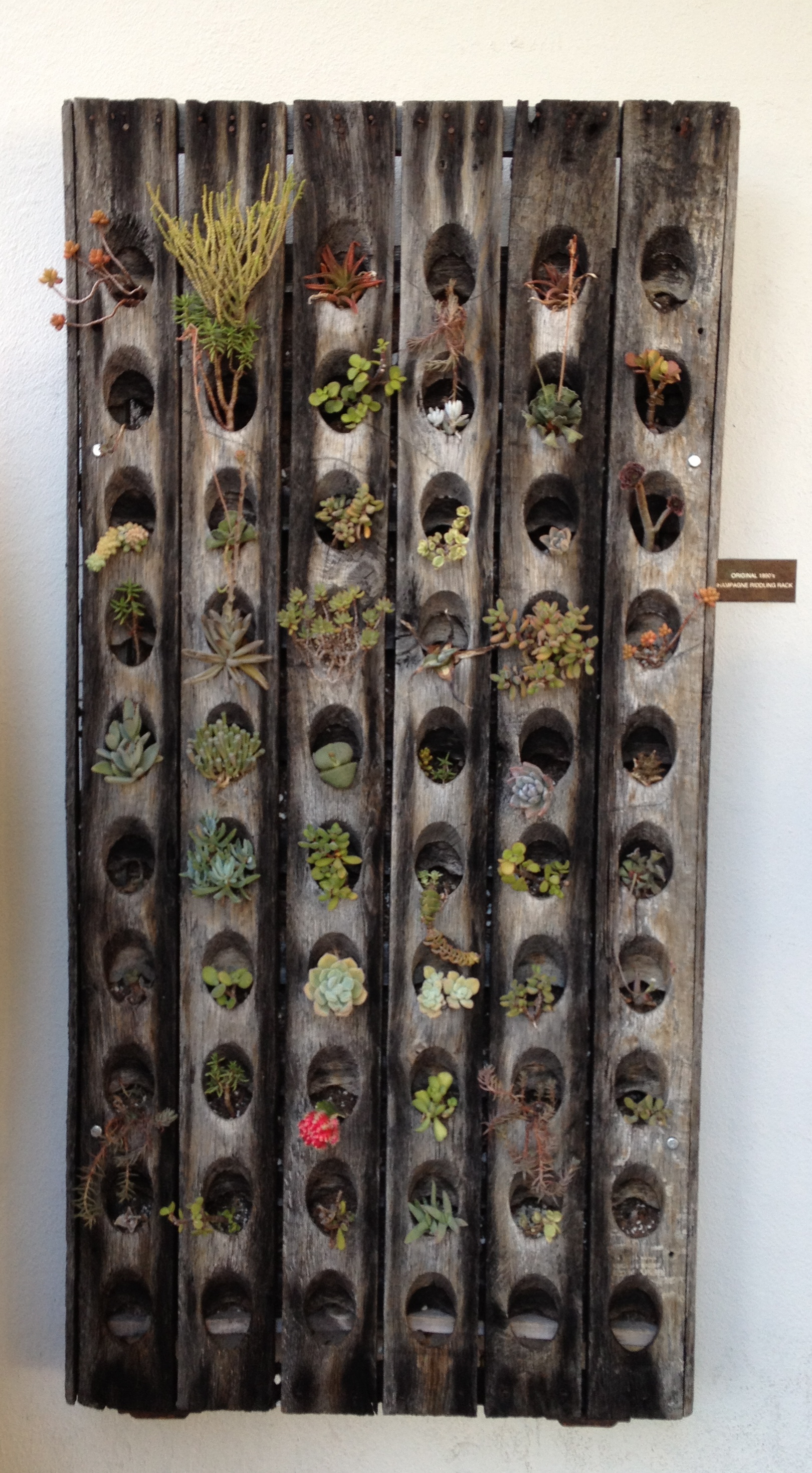
I thought I would also share a few photos that we found while out exploring recently. This we found in Santa Barbara, California. It is a fun way to grow plants, using an old or used wine rack.

planter idea in Santa Barbara

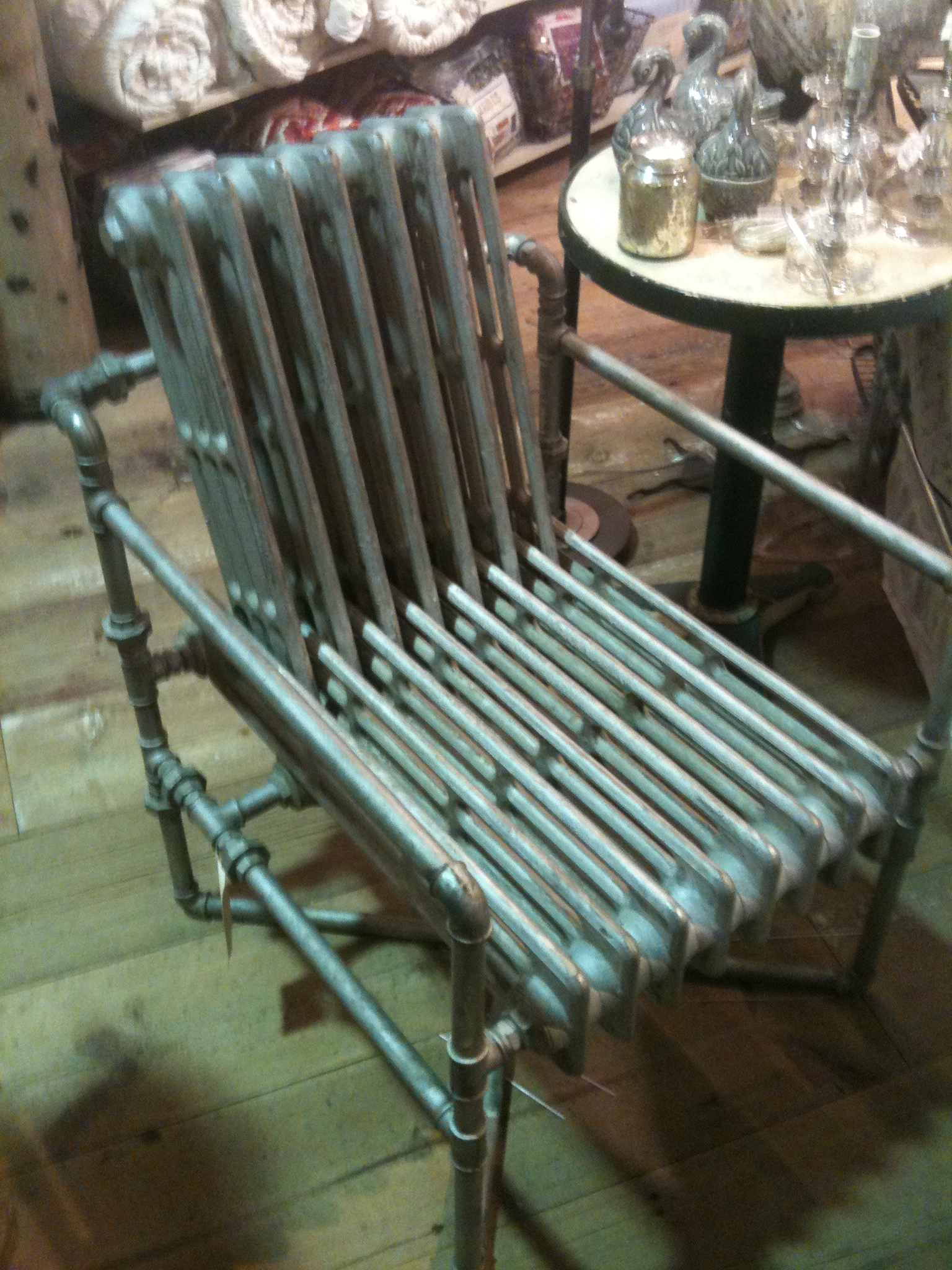
This chair (I cannot imagine how much it weighs) we found at Anthropologie. I love it. Not at all comfortable, but just a clever design using old radiators!

chair in Anthropologie

What would your ideal weekend look like?

Happy weekend to you – hope you have some sun!

Are you the scary customer?

I cannot say I am always the nicest customer. After working in customer service for so long I have a shorter fuse. I know what it takes and now have high expectations for what a customer experience should look like. These days my husband makes the calls pertaining to our accounts. He has a lot more patience than I do, and I often am – well to put it nicely a bit too blunt over the phone.

I recently finished reading: Malled: My Unintentional Career in Retail by Caitlin Kelly. It is a good memoir of Caitlin’s experience working in retail between 2007 and 2009. She is a freelance writer, who needed income during the economic downturn, and she chose to work at The North Face store near her home in New York City. Her job paid between $9-11 an hour with no commission or benefits (since she worked part-time). She was also provided a uniform for her job (many retail jobs do not provide this for free). Her book was a reminder to me to watch how I might treat retail workers, whether at the mall, grocery store, boutique, etc. Caitlin is a journalist so she already had experience working with strangers and the public, asking questions, and connecting with them. I loved her fresh approach to how she interacted with her customers. We could stand to remember this when dealing with our co-workers, family, and friends.

“I lived for these moments. Retail, at its rare best, allows total strangers to quickly connect and converse meaningfully. It’s really, often, about trust, the merchandise and the sales floor merely the means through which two people, however briefly, can slow down long enough to discover and enjoy common ground. It wasn’t an accident that after a twenty-minute conversation with me someone would easily spend $400, or much more. That person had received my careful, individual, and undivided attention, a rarity in any store. A rarity anywhere, really.” page 86

Throughout her book she shares how the corporate offices did all they could to cut back on their sales staff to save money. The less they paid their sales associates, the more profit they made. The less associates they had on each shift, the higher their profits. Many had little to no training, and no thanks or gratitude from management or the head corporate offices. Associates were constantly on their feet, in sometimes horribly ventilated storefronts, with short breaks, annoying music, and irate, rude, and aggressive customers. This all leads to extremely high turnover. By the end of Caitlin’s 2 year stint at The North Face she says the following:

“Now, though, I also carefully and consistently thanked anyone doing a service job well, from grocery baggers to gas station attendants. I viscerally appreciated how grim it could be, how little many customers thought of them, and how hard and poorly paid was the work.” page 205

I vow to curb my frustration, whether with the store, retail worker, or with something in my own life, and not take it out on the individual working in the store or over the phone that day. If we were all to do that, we could make a change in how retail workers experience customers. They do not deserve our frustrations, anger, or scorn. Often, the retail worker has no control over the issues we may have with their company. Much of the time, store management and corporate headquarters do not want to hear the complaints or comments their sales force has heard from customers. The best way to communicate issues that might be widespread between many stores is to contact the corporate offices to voice your concerns.

Are you like me? Do you need to think again about how you are treating retail workers?